
Author: wmelnick
Media Arts and English high school teacher who loves using technology to enhance learning and engage students. Experiments with online learning and teaches in Brightspace.
After Effects
 Adobe After Effects is the software program for creating special effects. It was used just recently to produce the Oscar winning visual effects for Hugo. Video Copilot is the place to go for tutorials for After Effects. It has both beginner and advanced tutorials.
 The basic training tutorials are in this link.
Here are the individual links to the ten basic training tutorials:
1. Introduction All the basics on how to navigate the program
2. Effects How to add simple special effects using the effects and presents pallette to find specific plugins.
3. Animation Animating and adding keyframes. Adding motion blur to animated layers and short cuts.
4. Keying and Transparency How transparency works in After Effects from simple colour keying to transfer modes.
5. Motion Tracking This tutorial covers several kinds of motion tracking including stabilizing a shaky shot, performing a sign replacement and motion tracking video to incorporate motion graphics seamlessly. This is an advanced tutorial.
6. Time Remapping How to create slow motion and how to speed up frames.
7. 3D Integrating Basics of 3D with depth of field covered and particle system. Advanced tutorial.
8a. Titles Part 1 8b. Titles Part 2 Fun with text.
9. Expressions: Scripting Language in After Effects. More advanced tutorial.
10. Rendering: Exporting the finished movie How to export out your files to various formats and compression rates.
Half Blood Blues
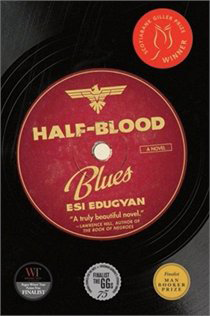 Winner of the 2011 Giller Prize, Esi Edugyan talks about her novel HERE with CNN.
Excerpt:
Opening chapter: Paris 1940
Chip told us not to go out. Said, don’t you boys tempt the devil. But it been one brawl of a night, I tell you, all of us still reeling from the rot – rot was cheap, see, the drink of French peasants, but it stayed like nails in you gut. Didn’t even look right, all mossy and black in the bottle. Like drinking swamp water.
See, we lay exhausted in the flat, sheets nailed over the windows. The sunrise so fierce it seeped through the gaps, dropped like cloth on our skin. Couple hours before, we was playing in some back-alley studio, trying to cut a record. A grim little room, more like a closet of ghosts than any joint for music, the cracked hearts lisping steam, empty bottles rolling all over the warped floor. Our cigarettes glowed like small holes in the dark, and that’s how I known we wasn’t buzzing, Hiero’s smoke not moving or nothing. The cig just sitting there in his mouth like he couldn’t hear his way clear. Everyone pacing about, listening between takes to the scrabble of rats in the wall. Restless as hell. Could be we wasn’t so rotten, but I at least felt off. Too nervous, too crazed, too busy watching the door. Forget the rot. Forget the studio’s seclusion. Nothing tore me out of myself. Take after take, I’d play sweating to the end of it only to have Hiero scratch the damn disc, tossing it in the trash.
“Just a damn braid of mistakes,” Hiero kept muttering. “A damn braid of mistakes.”
So begins the tale of a brilliant jazz musician, a talent lost to the brutality of the Nazis, his tale retold by his old band mate Sid. What really happened to Hiero? The story relives those smoky, passionate times full of resistance and music. An excellent story.
Amercian Dervish
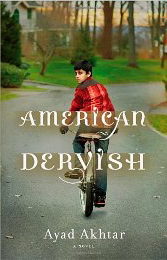 Ayad Akhtar brings us the story of a Muslim boy growing up in Milwaukee, a perspective that is innocent, yet full of clarity and understanding. It all begins as a college student looking back at his childhood, a well to do family where home life is stormy at best but interrupted by the arrival of Mina, a childhood friend of his mother. This is where his spiritual journey begins as he navigates his way through both Muslim and Jewish cultures. An intimate look at his coming of age story.
Read the New York Times Review HERE
 Digitizeme