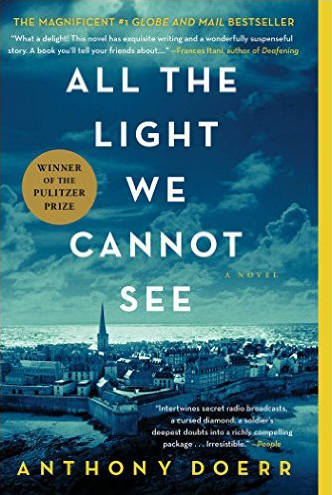
All the Light We Cannot See

All the Light We Cannot SeeWinner of the 2015 Pulitzer Prize for Fiction, Anthony Doerr writes an enthralling story about love and empathy amidst the terrors of war and extremism. The story revolves around a blind young girl and her devoted father, who creates an exact replica of her town so that she can easily find her way.

The girl, Marie-Laure, had become blind by the age of six. Her father is a locksmith who works at the Museum of Natural History. As his daughter’s sight finally fails, her father builds her a model of Paris, and in this way she is able to navigate around the city. The Jardin des Plantes is their favourite place, and here Marie-Laure orients herself by counting drain covers and trees and streets, memorising routes and recognising the scents of trees and flowers.

In a parallel story, a young boy in Germany, Werner, an orphan, comes to the notice of the Nazis for his astonishing skill at fixing radios, and this leads to his relocation to an elite school aimed at providing skills for the Reich. Little Werner proves his worth and survives, even though the school is brutal and unrelenting.

When the Nazis arrive in Paris and begin to investigate the museum, demanding keys from Marie’s father, he makes plans to move to his uncle’s house in Saint-Malo. Despite her blindness, the girl is able to visualise the layout of the town when her father makes a small and detailed model of it. Months go by. Werner moves closer to the front as the Germans favour experts who can pick up radio transmissions from the allies. Life in Saint-Malo becomes increasingly difficult as the Germans take full control. Marie-Laure’s father is investigated and taken away, ending up in a German camp. Marie-Laure, virtually all alone with her eccentric great uncle now, joins the resistance and carries messages in baguettes. The Guardian


The Right to be Cold

The Right to be ColdSheila Watt-Cloutier shares her story in the Walrus. Naomi Klein reviews the book in the Globe & Mail. Klein writes,

Part of what makes this book so illuminating is that it insists on being more than a manifesto. In weaving politics with her own life story, themes emerge that challenge the tendency to treat climate change as some new and singular threat. In Watt-Cloutier’s narrative, just as dog sleds have been replaced by snow machines, so the emissions from the entire fossil-fuel-driven global economy are threatening the survival of her culture. And just as pollutants from industrial activities have ended up in the flesh and fat of the animals Inuit people rely on for food, so these same industrial activities are causing global temperatures to rise, threatening the continued existence of these same animals. Climate change, in other words, is nothing new – it is the ultimate expression of the same threats that have been ravaging this part of the world for a very long time.

Inuit culture, however, is far from dead and in fact is thriving despite the odds. That, argues Watt-Cloutier, is very good news, because her people’s hard-won knowledge about how to live sustainably on the land “could serve as a model for all nations, compelling the world to make the strong cuts in emissions needed to mitigate climate change.”

Uber vs The Taxi

UBERThe Walrus talks about the fight between Toronto Uber and the taxi drivers in their latest issue HERE. According to the article,  “The mayor wants to create a “level playing field,” where ride sharing can go bumper to bumper with licensed taxis. But for that to work, “Uber can’t continue operating like it’s the Wild West, where you can have anyone you like driving a car around without any regulation whatsoever. That’s not in the public interest.” Find out more about the people behind Uber HERE.

Uber is just one of the growing number of examples of how the modern generation is looking to help each other out. You can now book a couch (couch surfing) in someone’s living room in any country in the world, at a significant rate cut from a traditional hotel.  Airbnb offers rooms in houses all around the world, stays for overnight or longer.  You can find any article that you want searching in kijiji or craigslist. No store front, middle men or advertising dollars exchanged.

What should the politicians do, if anything, to curb this type of underground economy? Is it fair to the workers of the existing institutions? What do you think?


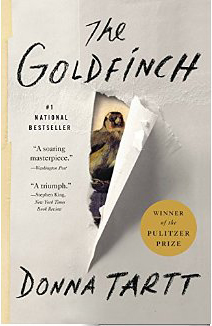
The Goldfinch

The GoldfinchDonna Tartt has conjured up some critical controversy with her latest novel, The Goldfinch. While it has been awarded the Pulitzer Prize for Fiction 2014, the critics have been fighting over whether or not this book should be getting the accolades that is has. Read more about it in Vanity Fair.

But, controversy or not, it is a fascinating, enthralling story about Theo Decker. Theo’s troubles begin when, while visiting the Metropolitan Museum of Art with his mother, the museum is blown up by terrorists, killing his mother, while  he barely escapes with his life, and with one of the most valuable paintings in the world, the Carel Fabritius masterpiece, The Goldfinch. His life takes on many twists and turns as he struggles to keep the painting hidden and ultimately find meaning for his own life.

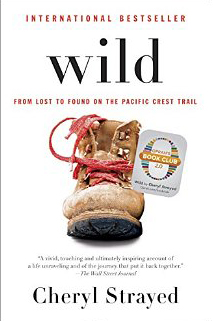
Wild

Cheryl Strayed recounts her journey down the Pacific Crest Trail.

At twenty-two, Cheryl Strayed thought she had lost everything. In the wake of her mother’s death, her family scattered and her own marriage was soon destroyed. Four years later, with nothing more to lose, she made the most impulsive decision of her life. With no experience or training, driven only by blind will, she would hike more than a thousand miles of the Pacific Crest Trail from the Mojave Desert through California and Oregon to Washington State—and she would do it alone. Told with suspense and style, sparkling with warmth and humor, Wild powerfully captures the terrors and pleasures of one young woman forging ahead against all odds on a journey that maddened, strengthened, and ultimately healed her. Wild