The Virgin Cure

To the Reader:

in 1871, I was serving as a visiting physician for the New York Infirmary for Indigent Women and Children. While seeing to the health and well-being of the residents of the Lower East Side, I met a young girl, twelve years of age, named Moth.

In the pages that follow, you will find her story, told in her own words, along with occasional notes from my hand. In the tradition of my profession, I intended to limit my remarks to scientific observations only, but in the places where I felt compelled to do so. I’ve added a page or two from m past. These additions are offered in kindness and with the best of intentions.

                                  October 1878 S.F.H Doctor of Medicine

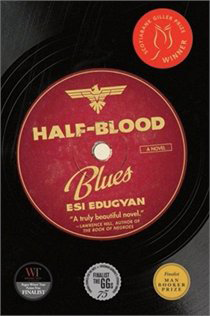
Half Blood Blues

Winner of the 2011 Giller Prize, Esi Edugyan talks about her novel HERE with CNN.

Excerpt:

Opening chapter: Paris 1940

Chip told us not to go out. Said, don’t you boys tempt the devil. But it been one brawl of a night, I tell you, all of us still reeling from the rot – rot was cheap, see, the drink of French peasants, but it stayed like nails in you gut. Didn’t even look right, all mossy and black in the bottle. Like drinking swamp water.

See, we lay exhausted in the flat, sheets nailed over the windows. The sunrise so fierce it seeped through the gaps, dropped like cloth on our skin. Couple hours before, we was playing in some back-alley studio, trying to cut a record. A grim little room, more like a closet of ghosts than any joint for music, the cracked hearts lisping steam, empty bottles rolling all over the warped floor. Our cigarettes glowed like small holes in the dark, and that’s how I known we wasn’t buzzing, Hiero’s smoke not moving or nothing. The cig just sitting there in his mouth like he couldn’t hear his way clear. Everyone pacing about, listening between takes to the scrabble of rats in the wall. Restless as hell. Could be we wasn’t so rotten, but I at least felt off. Too nervous, too crazed, too busy watching the door. Forget the rot. Forget the studio’s seclusion. Nothing tore me out of myself. Take after take, I’d play sweating to the end of it only to have Hiero scratch the damn disc, tossing it in the trash.

“Just a damn braid of mistakes,” Hiero kept muttering. “A damn braid of mistakes.”

So begins the tale of a brilliant jazz musician, a talent lost to the brutality of the Nazis, his tale retold by his old band mate Sid. What really happened to Hiero? The story relives those smoky, passionate times full of resistance and music. An excellent story.


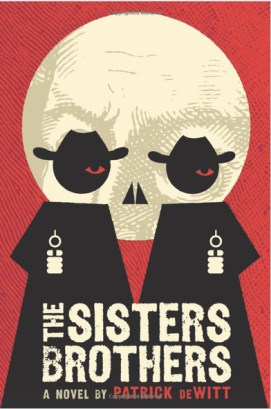
The Sisters Brothers

A novel in the tradition of a true Western – saloons, gun-slingers, beautiful damsels, gold – it has it all!

This is the story of two brothers, the Sisters brothers, who are trying to make a living as hired guns for the Comodore. Each brother has his own demons, but they are an inseparable team. But, life has thrown them into a job where one brother starts to question the rationale for murder and he begins to imagine settling down to a normal life.  It almost looks like he may be close to his goal, when disaster strikes!

Patrick de Witt web site

Short listed for the Man Booker Prize

Choosing His Coffin

This is Austin Clarke’s collection of his best short stories This is his finest work from more than forty years of storytelling, drawing on his Caribbean roots as well as his years living in Canada and the United States. From dust jacket.

As a Canadian writer born and raised in Barbados, Austin Clarke has been able to explore the difficult lives of Caribbean immigrants in Toronto from a unique perspective. Clarke is well-known for his many powerful short stories which deal with the adaptation of black people into white Canada.  His ninth novel, The Polished Hoe, won the Giller Prize for fiction in 2002, and the Regional Commonwealth Prize for best book in 2003. Clarke has published numerous collections of short stories including Choosing his Coffin: the best stories of Austin Clark (2003). In 1999 he was awarded the W.O. Mitchell Prize for producing an outstanding body of work and the Rogers Communication Writers Trust Prize (1998). Athabasca University description.

Sisters in the Wilderness: The Lives of Susanna Moodie and Catharine Parr Traill

Synopsis from web site: Susanna Moodie and Catharine Parr Traill are icons of Canadian literature.

Their books, most notably Roughing it in the Bush and The Backwoods of Canada, have painted for readers in this country and around the world an enduring portrait of Canadian pioneer life. They have become almost mythic figures in the Canadian literary landscape, appearing in the works of Northrop, Frye, Robertson Davies, Margaret Atwood, Timothy Findley and Margaret Laurence.

Most of what we know of these two English gentlewomen who spent their adult lives scrambling to survive in Britain’s hardscrabble colony comes from their own self-consciously crafted writings and from other writers’ sometimes fanciful depictions of them. But what were the women behind the authorial voices really like? What was their relationship to each other? And to their husbands, children and the family they left behind in England?

The answers are thoroughly captivating and not a little surprising. Their lives are revealed in the extremes that shaped them – fame and starvation, snobbery and passion, profound faith and ersatz spirituality. In Sisters in the Wilderness, Charlotte Gray breathes new life into the two remarkable characters and brings us a brilliantly clear picture of life in the backwoods and clearing of Upper Canada.