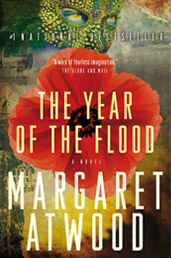
The Year of the Flood

Margaret Atwood, the darling of  Canadian literature has written an apocalyptic, futuristic novel, The Year of the Flood (reading_sample)

Adam One, the kindly leader of the God’s Gardeners – a religion devoted 2 the melding of science, religion, and nature – has long predicted a disaster. Now it has occurred, obliterating most human life. Two women remain: Ren, a young dancer locked away in a high-end sex club, and Toby, a former God’s Gardener, who barricades herself inside a luxurious spa. Have others survived? Ren’s bio-artist friend Amanda? Zeb, her eco-fighter stepfather? Her onetime lover, Jimmy? Or the murderous Painballers? Not to mention the CorpSeCorps, the shadowy policing force of the ruling powers… As Adam One and his beleaguered followers regroup, Ren and Toby emerge into an altered world, where nothing – including the animal life – is predictable. (taken from web site)

Atwood is an essential read for anyone who is Canadian or would like to understand the Canadian psychi.  Other books:

The Edible Woman (1969) for all you feminists; Surfacing (1972); Lady Oracle (1976); Life Before Man (1979); Bodily Harm (1981); The Handmaid’s Tale (1985); Cat’s Eye (1988); The Robber Bride (1993); Alias Grace (1996); The Blind Assassin (2000); Oryx and Crake (2003); The Penelopiad (2005); The Year of the Flood (2009). I have read all of these, the only one hard to finish was The Blind Assassin, the rest I would recommend!

Atwood has also written several short fiction collections. The one I would recommend would be The Tent (2006), a strange tale of a couple haunted by the images seen through the film of their tent in flickered images of light. I have also read Moral Disorder (2006); Wilderness Tips (1991) and Dancing Girls (1977). Atwood has also written these collections: Murder in the Dark (1983); Bluebeard’s Egg (1983); Good Bones (1992); Good Bones and Simple Murders (1994); The Labrador Fiasco (1996)

Selected passages from the book, Negotiating with the Dead: A Writer on Writing. Essential read for aspiring writers.

Follow Ms Atwood on Twitter
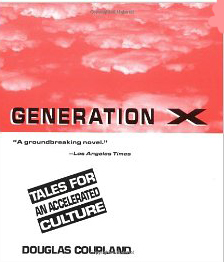
Generation X

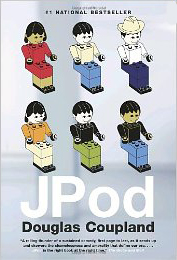
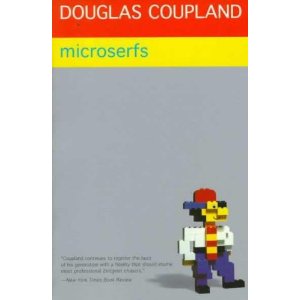
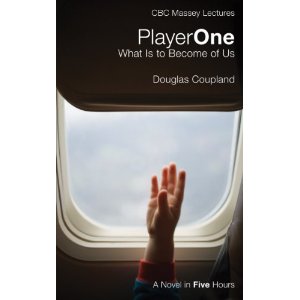
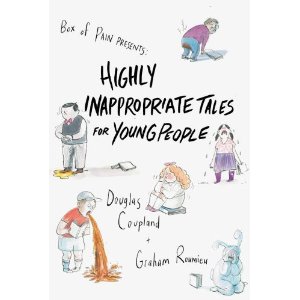
Douglas Coupland is a prolific Canadian writer with thirteen novels, seven non-fiction books, short stories and several screen plays.  He takes a clear view of our digital age children and reveals their angst and joys.

Generation X was his first novel, a hilarious satire on our consumer culture. Chapter names: The Sun is Your Enemy, Dead at 30 Buried at 70, Don’t Eat Yourself. Side notes include: Ozmosis: The inability of one’s job to live up to one’s self-image, Optional Paralysis: The tendency, when given unlimited choices, to make none, Black Holes: An X generation subgroup best known for their possession of almost entirely black wardrobes.

You can read his blog on NYT from 2006.

Bloodletting & Miraculous Cures

Vincent Lam is an emergency doctor in Toronto who has drawn on his own personal experiences to create this “Grey’s Anatomy” style story set in the chaotic arena of Canadian medicine. The characters are realistic, their dilemmas make you laugh/gasp/recoil/ponder. This book won the Giller Prize in 2006.

An excerpt from Take All of Murphy chapter:

“What?” “I’m going to get it,” he shouted. No one turned to look, in the way that drunk people do not notice each other as being out of the ordinary.

“You’re all screwed up,” said Ming quietly. “Do you dream about your Murphy?”

“Me? You should have nightmares, the way you treat him.”

“Hello? Dead? Remember? I don’t have dreams, because I don;’t have hang-ups about stupid corpse.”

“You -”

“You what?” said Ming. “You don’t like that? Corpse? Piece of Murphy meat?”

“You’re such a –”

“Just say it. What am I? You want to say it. Call me a name, go ahead and relieve your repressed little self. Say it.”

“No. Let’s just stop. No.”

“Go for it, pick a name. Bitch? Witch? Name your name.”

“I didn’t say anything, you’re picking the words now.”

“You’re such a wimp, I have to call myself names just to clarify what you think of me,” said Ming.

Chen was pushing sideways through the falling dancers. He arrived in time to hear Ming say to Sri, “Just fuck off. See, I can say what I think.” She stalked off, weaving across the floor.

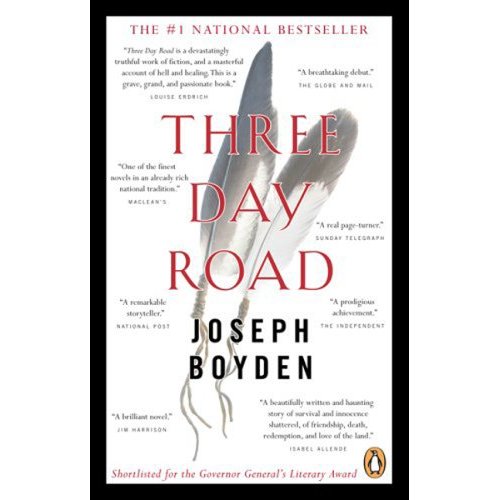
Three Day Road

It is 1919, and Niska, the last Oji-Cree medicine woman to live off the land, has received word that one of the two boys she grudgingly saw off to war has returned. She leaves her home in the bush of Northern Ontario to retrieve him, only to discover that the one she expected is actually the other.

Xavier Bird, her sole living relation, gravely wounded and addicted to the army’s morphine, hovers somewhere between the living world and that of the dead. As Niska paddles him the three days home, she realizes that all she can offer in her attempt to keep him alive is her words, the stories of her life.

In turn, Xavier relates the horrifying years of war in Europe: he and his best friend, Elijah Whiskeyjack, prowled the battlefields of France and Belgium as snipers of enormous skill. As their reputations grew, the two young men, with their hand-sewn moccasins and extraordinary marksmanship, became both the pride and fear of their regiment as they stalked the ripe killing fields of Ypres and the Somme.

But what happened to Elijah? As Niska paddles deeper into the wilderness, both she and Xavier confront the devastation that such great conflict leaves in its wake.

Inspired in part by real-life World War I Ojibwa hero Francis Pegahmagabow, Three Day Road  reinvents the tradition of such Great War epics as Birdsong and All Quiet on the Western Front. Beautifully written and told with unblinking focus, it is a remarkable tale, one of brutality, survival, and rebirth. Taken from Joseph Boyden web site.

More books by Joseph Boyden: Through Black Spruce, Born with a Tooth.

Quill and Quire Review