
Aleka takes a closer look at the treatment of women in Joseph Boyden’s Three Day Road. This is an interesting and thought provoking interactive essay.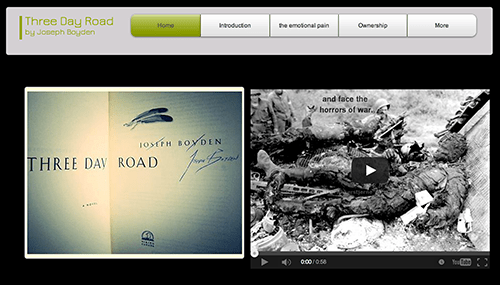
Category: ENG4U Reading List
Andrew’s Brain
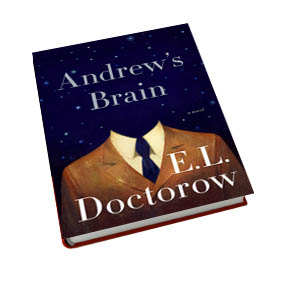
Just finished this novel and it was hard to put down. It compliments our study of Hamlet quite profoundly, with heavy, heart wrenching decisions that alter reality forever. Here is the description from E.L. Doctorow’s web site:
Speaking from an unknown place and to an unknown interlocutor, Andrew is thinking, Andrew is talking, Andrew is telling the story of his life, his loves, and the tragedies that have led him to this place and point in time. And as he confesses, peeling back the layers of his strange story, we are led to question what we know about truth and memory, brain and mind, personality and fate, about one another and ourselves. Written with psychological depth and great lyrical precision, this suspenseful and groundbreaking novel delivers a voice for our times—funny, probing, skeptical, mischievous, profound.Andrew’s Brain is a surprising turn and a singular achievement in the canon of a writer whose prose has the power to create its own landscape, and whose great topic, in the words of Don DeLillo, is “the reach of American possibility, in which plain lives take on the cadences of history.”
Little Brother
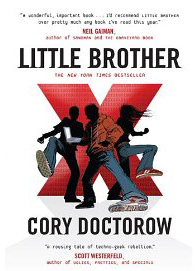
Cory Doctorow’s book is an action packed, fast-paced sci-fi that mixes mystery, intrigue, terror and friendship. With shades of 1984, but with a closer to home feel, the book follows the missteps of a group of friends that are suspected of terrorism in their own home town after a disastrous explosion. The group are young gamers and are able to circumvent the “gait recognition” security cameras of their high school to skip out and play the scavenger game Harajuku Fun Madness. They use their gaming expertise to build an underground resistant to the evil government.
You can download the book for free here
The Orenda
I awake. A few minutes, maybe, of troubled sleep. My teeth chatter so violently I can taste I’ve bitten my swollen tongue. Spitting red into the snow, I try to rise but my body’s seized. The oldest Huron, their leader, who kept us walking all night around the big lake rather than across it because of some ridiculous dream, stands above me with a thorn club. The weight of these men give their dreams will be the end of them.
Although I still know little of their language, I understand the words he whispers and force myself to roll over when the club swings towards me. The thorns bite into my back and the bile of curses that pour from my mouth make the Hurons convulse with laughter. I am sorry, Lord, to use Your name in vain.
This is plight of a Jesuit priest in the opening scene of Joseph Boyden’s newest novel, The Orenda. It is an ancient story, but it is now told with fresh insight and, happily, a new perspective. History is rough and raw and this story is no exception. The story revolves around a kidnapped princess, a Jesuit missionary and an elder in the Huron nation. Their worlds collide but Boyden keeps the emotions raw as he steers us into the truth.
The Ocean at the End of the Lane
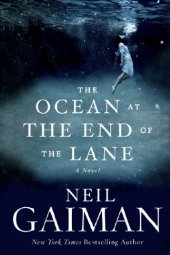
Author: Neil Gaiman, born in Hampshire, UK, now lives in Minneapolis. He also writes many graphic novels including Black Orchid, Sandman, 1602, Coraline, Creatures of the Night to name a few.
The Ocean at the End of the Lane is a deceptively simple tale of childhood memories that evolves into mythic proportions. We are left asking, what are memories and how do they shape who we are? It is told with an openness and clarity and we are even reminded in the midst of an intense segment of drama that, he, after all, is only seven years old. An excerpt:
“I’ll apologize,” I told him. “I’ll say sorry. I didn’t mean what I said. She’s not a monster. She’s …she’s pretty.”
He didn’t say anything in response. The bath was full, and he turned the cold tap off.
Then, swiftly, he picked me up. He put his huge hands under my armpits, swung me up with ease, so I felt like I weighed nothing at all. I looked at him, at the intent expression on his face. He had taken off his jacket before he came upstairs. He was wearing a light blue shirt and a maroon paisley tie. He pulled off his watch on its expandable strap, dropped it onto the window ledge.
Then I realized what he was going to do, and I kicked out, and I flailed at him, neither of which actions had any effect of any kind as he plunged me down into the cold water.
I was horrified, but it was initially the horror of something happening against the established order of things. I was fully dressed. That was wrong. I had my sandals on. That was wrong. The bathwater was cold, so cold and so wrong. That was what I thought, initially, as he pushed me into the water, and then he pushed further, pushing my head and shoulders beneath the chilly water, and the horror changed its nature. I though, I’m going to die.
 Digitizeme