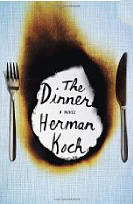
The Dinner

The Dinner copyHerman Koch, an author from the Netherlands, writes a riveting novel about two families who meet for dinner to discuss an urgent family matter – their teenage sons are in big trouble. What will they do about it? How is it affecting their relationships? What are the consequences of their decisions? There are sinister undertones that make you wonder if you are getting a subjective view of the story.

The story delves into the nuances of using public media and the teenage propensity to share and brag. You can justify pretty much anything if you twist your reasoning enough.

A chilling similarity to this real-life story this April 2015.
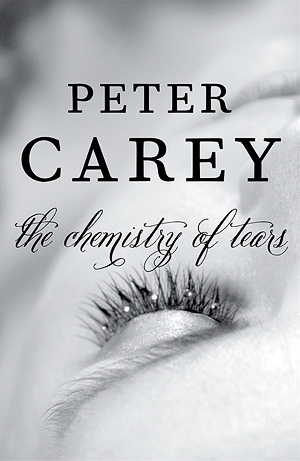
The Chemistry of Tears

“In his most recent novel, The Chemistry of Tears, Carey is concerned with nothing less than the fate of the earth. The story of a contemporary museum curator who is restoring an automaton – a clockwork silver swan – takes place in 2010, the year the BP oil spill threatened environmental disaster in the Gulf of Mexico. A parallel story takes place in the 19th century – as Henry Brandling struggles to get the swan made as a gift for his consumptive son.

“If you ask why are you interested in the 19th century, I would say, because we’re living in it,” Carey said in an interview with CBC News. “We’re living with the consequences of it. We argue with the 19th century capitalists, growth is good – we still talk like that…”‘   Susan Noakes  CBC link

Read the New York Times review HERE

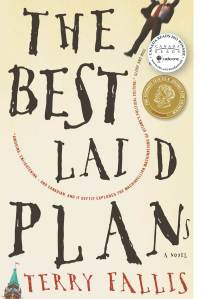
The Best Laid Plans

Terry Fallis writes a political satire that is funny and sophisticated. For an inside look at the workings of local politics, this is the book for you.

Chapter One excerpt:

After an impressive hang time, I plummeted back to the sidewalk, my fall broken by a fresh, putrid pile of excrement the size of a small ottoman. I quickly scanned the area for a hippo on the lam.

Before I quite literally found myself in deep shit, my day had actually been ripe with promise.

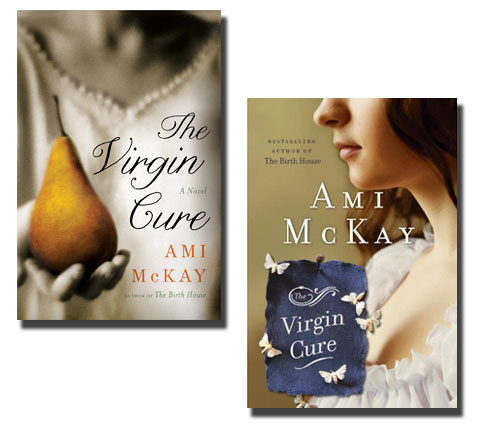
The Virgin Cure

To the Reader:

in 1871, I was serving as a visiting physician for the New York Infirmary for Indigent Women and Children. While seeing to the health and well-being of the residents of the Lower East Side, I met a young girl, twelve years of age, named Moth.

In the pages that follow, you will find her story, told in her own words, along with occasional notes from my hand. In the tradition of my profession, I intended to limit my remarks to scientific observations only, but in the places where I felt compelled to do so. I’ve added a page or two from m past. These additions are offered in kindness and with the best of intentions.

                                  October 1878 S.F.H Doctor of Medicine

A Visit from the Goon Squad

Jennifer Egan talks about her book:

I began A Visit from the Goon Squad without a clear plan, following my own curiosity from one character and situation to the next. My guiding rules were only these: 1) Each chapter had to be about a different person. 2) Each chapter had to have a different mood and tone and approach. 3) Each chapter had to stand completely on its own. This last was especially important; since I ask readers to start over repeatedly in A Visit from the Goon Squad, it seemed the least I could do was provide a total experience each time.
 
In other words, you can read this book without making a single connection between any two chapters. They were written—and published—as individual pieces, apart from the book as a whole. So, as you read A Visit from the Goon Squad, don’t worry about whether you’re “getting it” or whether it’s really a novel, or what connections you might have missed. None of that matters. The point is to have fun reading a tangle of stories in a lot of contrasting styles. If you’ll do that, then you’re exactly the reader I’d hoped for.