Cutting for Stone

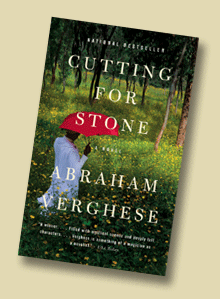
Abraham Verghese writes a compelling novel about two brothers and their life and death stuggles together. From the author’s web site:

The story is a riveting saga of twin brothers, Marion and Shiva Stone, born of a tragic union between a beautiful Indian nun and a brash British surgeon at a mission hospital in Addis Ababa. Orphaned by their mother’s death in childbirth and their father’s disappearance, and bound together by a preternatural connection and a shared fascination with medicine, the twins come of age as Ethiopia hovers on the brink of revolution.But it’s love, not politics — their passion for the same woman — that will tear them apart and force Marion to flee his homeland and make his way to America, finding refuge in his work at an underfunded, overcrowded New York City hospital. When the past catches up to him, wreaking havoc and destruction, Marion has to entrust his life to the two men he has trusted least in the world: the surgeon father who abandoned him and the brother who betrayed him

You can read the first chapter HERE

The God of Small Things

In her first novel, award-winning Indian screenwriter Arundhati Roy conjures a whoosh of wordplay that rises from the pages like a brilliant jazz improvisation. The God of Small Things is nominally the story of young twins Rahel and Estha and the rest of their family, but the book feels like a million stories spinning out indefinitely; it is the product of a genius child-mind that takes everything in and transforms it in an alchemy of poetry. The God of Small Things is at once exotic and familiar to the Western reader, written in an English that’s completely new and invigorated by the Asian Indian influences of culture and language. Arundhati Roy has written screenplays for two films and lives in New Delhi.

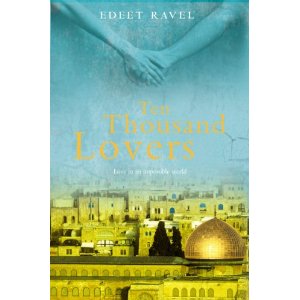
Ten Thousand Lovers

Edeet Ravel was born on an Israeli kibbutz and now lives in Canada. Lily is a young emigrant student exploring the wonders and terrors of her new land when she meets the man of her dreams. Ami, a former actor, is handsome, intelligent and exciting – but, like his beautiful, disintegrating country, he has a terrible flaw – he is an army interrogator.

Exerpt: “Fashila is an Arabic word meaning to fail, lose courage, despair, be disappointed, act in a cowardly way. In Hebrew slang, fashla means mess-up, snafu, an embarrassing or disastrous or humiliating mistake. You can use it for small things, like forgetting you had to meet someone, or you can use it for big things like the Yom Kippur War. A box-cell is a cell that is five feet by five feet by two and a half feet. The person can’t stand up or stretch out. You find box-cells in most Israeli prisons: they’re punishment cells, and nobody lasts very long in them – people start going mad fast and they don’t want to go back in once they’ve been let out.”

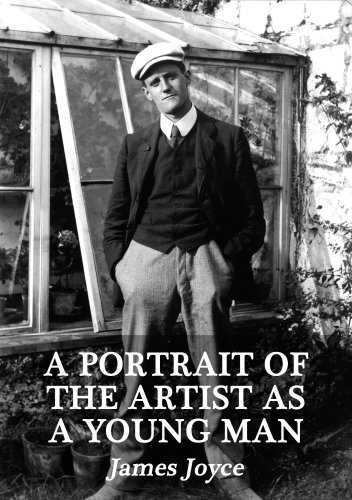
A Portrait of the Artist as a Young Man

Works by James Joyce:

Collected Poems, Dubliners, Exiles (play), Finnegans Wake, Ulysses, Giacomo Joyce.

Excerpt from Portrait of the Artist: Once upon a time and a very good time it was there was a moocow coming down along the road and this moocow that was coming down along the road met a nicens little boy named baby tuckoo… His father told that story: his father looked at him through a glass: he had a hairy face. He was baby tuckoo. The moocow came down the road where Betty Bryne lived: she sold lemon platt.

Like some of the best novels in the world it is the story of an education: it is by far the most living and convincing picture that exists of an Irish Catholic upbringing. It is a mosaic of jagged fragments that does altogether render with extreme completeness the growth of a rather secretive, imaginative boy in Dublin…One believes in Stephen Dedalus as one believes in few characters in fiction. H. G. Wells 1916

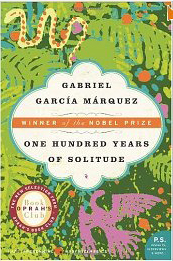
One Hundred Years of Solitude

Gabriel Garcia Marquez is a Colombian born author who won the Nobel Prize for Literature for this first novel. It is described as the most influential literary work of our time, the greatest revelation in the Spanish language since Don Quixote of Cervantes (Chilean poet and Novel laureate Pablo Neruda).

It is a story that spans many generations and gives the reader a glimpse of history, culture, life with all the mythology, miracles  – stories first told by his grandmother. Marquez’s own story is a rags to riches saga, as this first book catapults him to international recognition.

From the book jacket: One Hundred Years of Solitude tells the story of the rise and fall, birth and death of the mythical town of Macondo through the history of the Buendia family. Inventive, amusing, magnetic, sad and alive with unforgettable men and women.

An except from the novel:

“Poor great-great-grandmother,” Amaranta Ursula said. “She died of old age.”

Ursula was startled.

“I am alive!” she said.

“You can see,” Amaranta Ursula said, suppressing her laughter, “that she’s not even breathing.”

“I’m talking!” Ursula shouted.

“She can’t even talk,” Aureliano said. “She died like a little cricket.”

Then Ursula gave in the the evidence. “My God,” she exclaimed in a low voice. “So this is what it’s like to be dead.”

Another shorter book by the same author that was very interesting, Chronicles of a Death Foretold. A gentleman is ambushed by two local men, brothers of a recently married, then disgraced girl (apparently by the poor murdered chap), who is brutally stabbed in broad daylight. The book reads like a murder mystery where everyone in town seemed to know about what was going to happen except the murder victim. Humourous with a distinct Caribbean flavour, this is a good read.